
The Good Chapter Problem
The 20 minute audit of the stories you stopped telling

Coaches don't need more followers. You need better marketing to the ones already watching. Follower to Client delivers weekly insights, paired with proven frameworks, swipes and templates from inside the fitness coaching businesses we write for so you can convert your warm audience… without cold outreach, ad spend, or going viral.
There’s a clip of Guru from Gang Starr getting interviewed at the start of You Know My Steez…
“That makes me know that what ‘re doing… we had the right idea in the beginning. And we just need to maintain our focus, and elevate… what we do, we update our formulas…
We have certain formulas, but we update ‘em with the times and everything, y’know?
So the rhyme style is elevated, the style of beats is elevated, but it’s still Guru & Premier - and there’s always a message involved.”
If you don’t know the song - I’ll link it at the end of this post.
There are probably only 25 stories - your formulas - you’ll tell over and over again as a coach.
The narrative spine that taught you lessons so strong that you actually built your whole philosophy around them.
But for many coaches, they feel like they rely on 2 kinds of stories…
Those which are very new - often partially borrowed from people whose content you consume now…
The Hormozi / Gary Vee / Jocko style content, which resonates with you… but is too advanced for the people you’re coaching…
So it doesn’t attract them.
Or the very old, dating back to the start of the journey, which has probably stopped resonating with you - but always bangs whenever you put it out.
Creating this content probably bores you, because you’re past it… and it keeps you feeling stuck, serving clients you want to outgrow.
I had a conversation with a coach yesterday who I absolutely adore. I think she’s exceptional at what she does. And she told me…
“I’m sitting on a goldmine of stories I’ve stopped telling.”
That’s what I call The Good Chapter Problem.
In practice, coaches haven’t run out of stories, but they’re in a chapter of their lives now where things are actually pretty good.
They’ve solved a lot of those early problems.
But the struggle chapters from the early days have a sort of legitimacy. They’re raw, scrappy, and have an underdog energy.
And the “good times” kinda feel like showing off… or that you have nothing left to teach.
And that can feel like you’re telling the same 3 stories over and over again - that are YEARS old.
So your audience are missing the bridge.
They resonate with your early struggle… that’s good.
They might see or sense your current success… that’s good, too.
But they’re missing the bridge that gets them there.
Now those early problems you solved - the ones that felt like earth shattering problems at the time… They’re just a normal day for you now.
In fact, they wouldn’t even register as problems.
Your CAPACITY for problems is so much greater now, you’ve solved something twice as hard this morning without even considering it a problem.
Let me give you an example…
When Boris closed the gyms in March 2020, I moved my business online. And I stayed awake ALL NIGHT trying to figure out how to “build a website”.
What I actually wanted was a landing page with an exit popup. But I didn’t have ANY of those words so I couldn’t even google it.
It wasn’t even the right solution to the problem!
But that felt like a 10/10 problem in terms of:
How hard it is
How urgent it is to solve it
And my capacity to solve it (skill, money, time etc. was 0/10).
So I remember that.
Now? Every single day I come to work and probably 80% of the jobs on my list are things I have no idea how to do.
But my capacity has expanded so much that it’s normal.
For a coach, this might be getting stuck in telling the story of your own transformation…
Weight loss, rehabbing an injury, maybe burnout…
These are the things you built your audience around.
But you’re not talking about anything in “the inbetween”.
The reason old problems felt so significant is because it took 100% of your ability (and more) to solve them. You HAD TO expand. You HAD TO become someone new to solve them.
It took more of you then.
But you’re not showing your audience the level of competence you actually have now.
The good chapters are still valuable. But they’re harder to recognise.
Important caveat: You do not have to talk about ANYTHING you don’t want to talk about. The point isn’t that you’re 100% transparent - you still control the narrative. You choose what you disclose, always.
I talk about sharing scars, not wounds.
Stuff you’ve solved, not stuff you’re solving.
Use the audit below to work through which chapters you’ve been skipping…
The Good Chapter Audit
Step 1: When you tell your story, where does it start and end? Write it out, in bullet point form - just to get the rough shape of it in order.
Step 2: When you tell your most common stories and share your lessons, there’ll be some parts you tell more than others… The parts you don’t tell: the little decisions that you used to lie awake worrying about, the hard conversations you avoided, the standard you no longer accept… Find 10 things that used to feel like a problem, but don’t any more.
Step 3: Find the fear for each of those things. It’s usually one of three things:
Not feeling like an expert - it’s just “something you did”
This already exists from someone way better to speak on it than me
I don’t want to make an error and get called out for it
It might be that you’re worried about who you’d attract by talking about it - don’t think about this yet, just name it.
Step 4: What patterns do you see? You’ll find repeating patterns about the kind of coach you are now - not just back when you were getting started. The answers are your good chapters.
…they’re also the bridge to help you shift your niche from the people you served at the start, to people you’d like to serve now.
Want a hand pulling out the golden nuggets from your story?
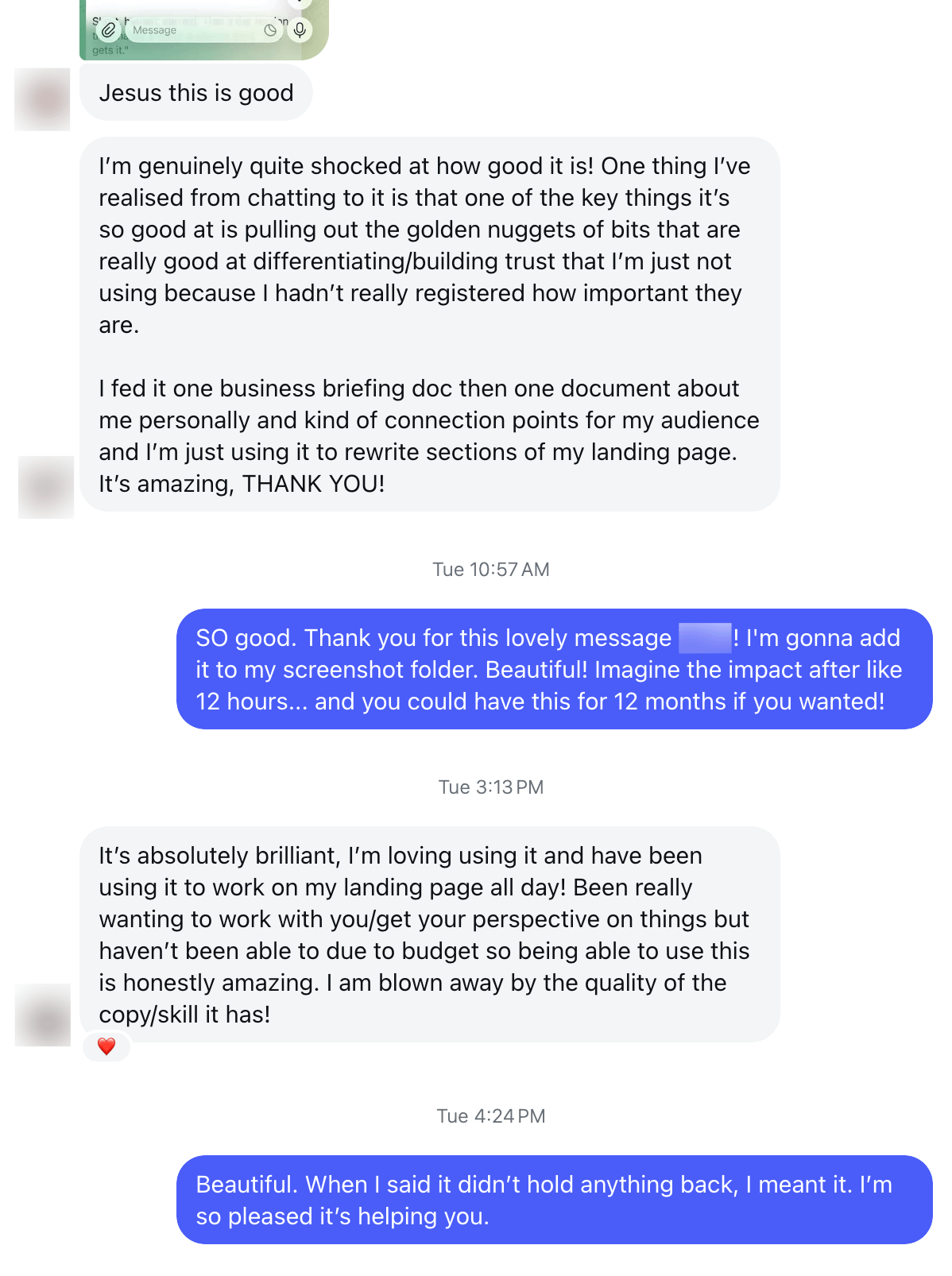
→ Start a 7 day free trial of CathAI now.
…Listen to You Know My Steez here.